
SPOT for Korean Cosmetics: When an EAEU Route Changes Timing and Cash Flow
How SPOT affects cosmetics moved by road through the EAEU: DOPP, QR code, security payment, and why direct imports from Korea follow a different route.
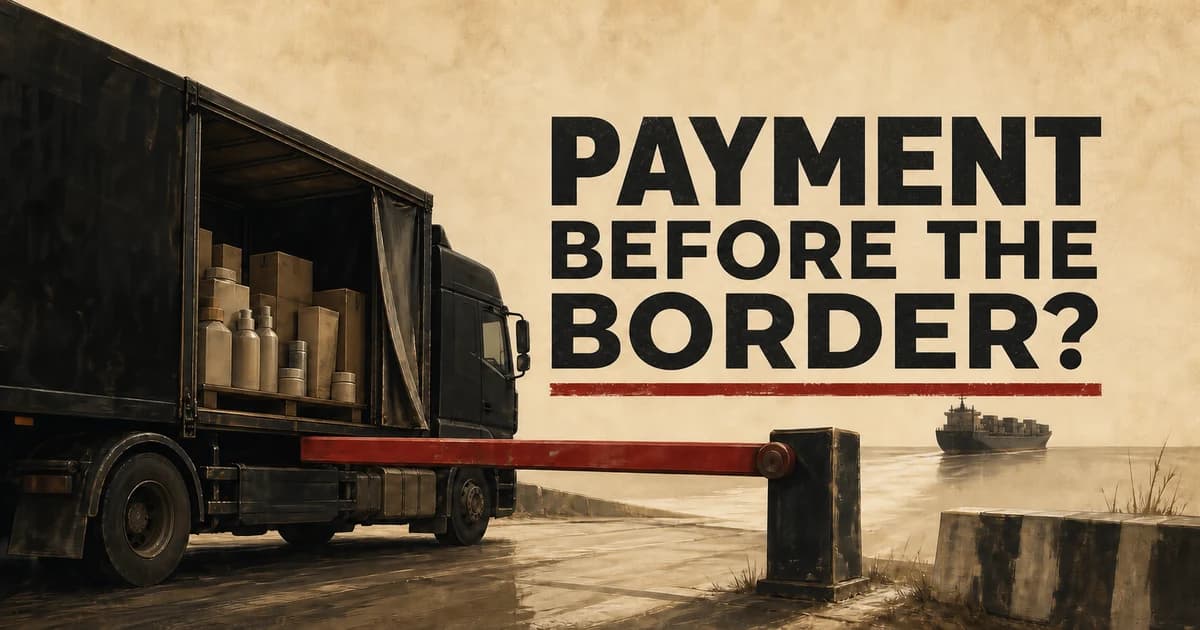
A shipment of Korean cosmetics may clear customs in Kazakhstan and then continue to Russia by truck. Since 1 July 2026, that route has required preparation before the vehicle reaches the Russian border.
The importer or intermediary must file a document on the upcoming goods delivery (DOPP, the Russian acronym), obtain a QR code, and, unless an exemption applies, make a security payment in advance. An incorrect licence plate or inconsistent product data can stop the vehicle at entry.
A direct shipment from Korea is different. If the goods arrive by sea or air and clear customs in Russia, SPOT does not apply to that route. The useful question therefore comes before the order is paid: where will the goods clear customs, and how will they cross the Russian border?
What changed on 1 July 2026
SPOT launched on 1 June 2026 with a transition period. During June, shipments from Armenia, Kazakhstan, and Kyrgyzstan were exempt from the security payment. Full operation began on 1 July 2026.
From that date, the main SPOT controls apply to road imports from EAEU member states:
- a DOPP filed before entry;
- a security payment unless the shipment qualifies for an exemption;
- a QR code available to the driver or freight forwarder;
- checks of the document status and shipment data;
- refusal of entry when the DOPP is missing, has an unsuitable status, or conflicts with the shipping documents.
The system is established by Federal Law No. 101-FZ. The rules for crediting the security payment against indirect taxes are set out in Federal Law No. 102-FZ.
How Korean cosmetics can fall within SPOT
SPOT covers goods entering Russia by road from Belarus, Armenia, Kazakhstan, or Kyrgyzstan. The country where the goods were manufactured does not change this test.
If cosmetics were made in Korea, cleared in another EAEU state, and then moved to Russia by truck, the Russian leg falls within SPOT. If the shipment arrives directly from Korea and clears customs in Russia, the regular procedure for imports from outside the EAEU applies instead.
For a buyer, the difference is practical. An EAEU route may add:
- DOPP preparation and transfer of the QR code to the carrier;
- cash for the security payment before the vehicle enters Russia;
- time to correct documents or replace a vehicle;
- the risk of refusal of entry if the shipment data conflicts.
A supplier's price means little without a clear route. Before placing the order, establish where the goods will clear customs and who is responsible for each SPOT step.
The DOPP must be filed before the vehicle enters Russia
A DOPP is an electronic record of an upcoming delivery. The applicant files it through the applicant service on the Federal Tax Service website.
It includes:
- the applicant, seller, and carrier;
- the contract, agreement, or specification;
- product name, EAEU HS code, quantity, and applicable permits;
- the vehicle's licence plate and expected entry date;
- the security-payment calculation or the grounds for exemption.
The general filing deadline is two calendar days before entry. When no security payment is required, the shorter deadline is no later than four hours before the goods cross the border.
After the document is checked and the required funds are reserved, the Federal Tax Service generates the QR code. According to the tax authority, the code is sent to the applicant within 15 minutes after the last required event. The applicant then passes it to the carrier.
If the vehicle changes en route, the applicant may file an amended DOPP with the new licence plate. A change to the seller, goods, payment amount, or expected date requires a new document. A new DOPP is also required for the remaining goods after a partial delivery.
What happens at the border
A mobile customs unit scans the QR code, checks the DOPP status, and compares its data with the shipping documents. The Federal Tax Service states that the check may take up to two hours.
Sending the driver a QR-code image is not enough on its own. Before departure, confirm that the document has the correct status, the licence plate matches, and the shipment data does not conflict with the consignment note or other applicable documents.
The systems involved do not all require literally identical fields: their documents serve different purposes. The importer's task is to remove contradictions from the information that applies to the shipment.
How the security payment affects cash flow
The security payment covers the expected import VAT and, where the product is subject to it, excise duty. It is calculated for each delivery and paid by bank transfer to a dedicated budget classification code.
Timing matters. The funds must be credited before entry, and the Federal Tax Service reserves the required amount against a specific DOPP. If the available balance is insufficient, the QR code will not be generated until the account is funded.
Any excess can be returned to the unified tax account. If the shipment is cancelled or arrives only in part, the reserved amount is released after the circumstances are reflected in the tax return and the desk audit is completed. The payment therefore belongs in the working-capital plan and shipment calendar, not in a last-minute calculation.
When the security payment is not required
An exemption from the payment does not remove the shipment from SPOT. The DOPP and QR code remain part of the route.
The Federal Tax Service lists permanent grounds for exemption, including:
- major-taxpayer status;
- tax monitoring;
- inclusion in the authorised economic operator register;
- imports that are not subject to indirect taxes in the cases provided by law;
- imports by a resident of a free or special economic zone into that zone;
- transit between EAEU member states through Russia.
A separate temporary rule applies to Belarus. Under Russian Government Resolution No. 641, no security payment is required through 31 October 2026 when the goods enter through the Russia-Belarus border and the supplier is registered in Belarus.
This relief covers the payment only. The applicant must still check the remaining SPOT requirements for the shipment.
Which goods are excluded
SPOT does not apply to certain goods and operations. The Federal Tax Service list includes cash, oil and petroleum products, electricity, goods transported by pipeline, personal purchases by individuals, certain movements involving the Kaliningrad Region, and supplies for diplomatic missions.
Cosmetics have no blanket product-group exemption. The route, mode of transport, and circumstances of the specific shipment remain decisive.
SPOT, product labelling, and marketplace listings serve different purposes
SPOT controls road entry from the EAEU. Chestny ZNAK controls product labelling. A digital platform checks the information that the law requires in a product listing.
Some information about the goods, manufacturer, and documents may overlap. That does not mean the three systems operate as a single database. Before dispatch, make sure that the applicable information is consistent rather than forcing unrelated documents into one template.
What to ask the supplier before paying for the shipment
If the cosmetics will travel through the EAEU, ask for the exact route and allocation of responsibility:
- where the goods will clear customs;
- how they will cross the Russian border;
- who will act as the SPOT applicant;
- who will file the DOPP and calculate the payment;
- who will pass the QR code to the carrier;
- what happens if the vehicle or delivery date changes;
- whether the payment and possible delay are included in the price and schedule.
Clear answers are more useful than a promise of "door-to-door delivery." The route determines which documents and funds must be ready before the vehicle enters Russia.
The facts and dates in this article were checked on 15 July 2026. Verify them against the current SPOT page on the Federal Tax Service website before planning a new shipment.
Sergey Maltsev, CEO, K-Business
Planning a road shipment through the EAEU?
Send the product details, country of dispatch, and intended route. We will review the import route and request the information needed to calculate the shipment terms.
FAQ
When did SPOT enter full operation?
SPOT launched on 1 June 2026 with a transition period. The full regime, including the security payment and refusal of entry for a vehicle without a valid DOPP and QR code, has applied since 1 July 2026.
Does SPOT apply to cosmetics imported directly from Korea?
A direct sea or air shipment from Korea that clears customs in Russia is outside this scenario. SPOT applies when goods enter Russia by road from another EAEU member state.
When must a DOPP be filed?
The general deadline is two calendar days before the goods enter Russia. If no security payment is required, the document may be filed no later than four hours before entry.
Is a security payment required for a shipment from Belarus?
Through 31 October 2026, a temporary exemption applies when the goods enter through the Russia-Belarus border and the supplier is registered in Belarus. The exemption covers the payment, not the other SPOT requirements.
What is checked through the SPOT QR code?
Customs checks that a DOPP exists, that it has the required status, and that its data is consistent with the shipping documents. A missing document, an invalid status, or discrepancies may result in refusal of entry.
Author
Сергей МальцевSee also
DataMatrix hidden by packaging: why we built a duplicator
Extra packaging can hide the original marking code from the scanner. Here is how we solved the warehouse problem with a local Windows DataMatrix duplicator.

K-Business at InterCHARM 2025 — our first stand and exhibition results
First K-Business stand at InterCHARM 2025 at Crocus Expo, Moscow. Stand F7: brands TFIT, Daypiel, Ciracle, Sweeteen, AUL. Results of meetings with Korean partners.