
Import Duty on Korean Cosmetics in Russia: 6.5% or 35%?
The Russian import duty on Korean cosmetics depends on the EAEU HS code: 6.5% for skincare and selected products, but 35% for shampoos and hair sprays.
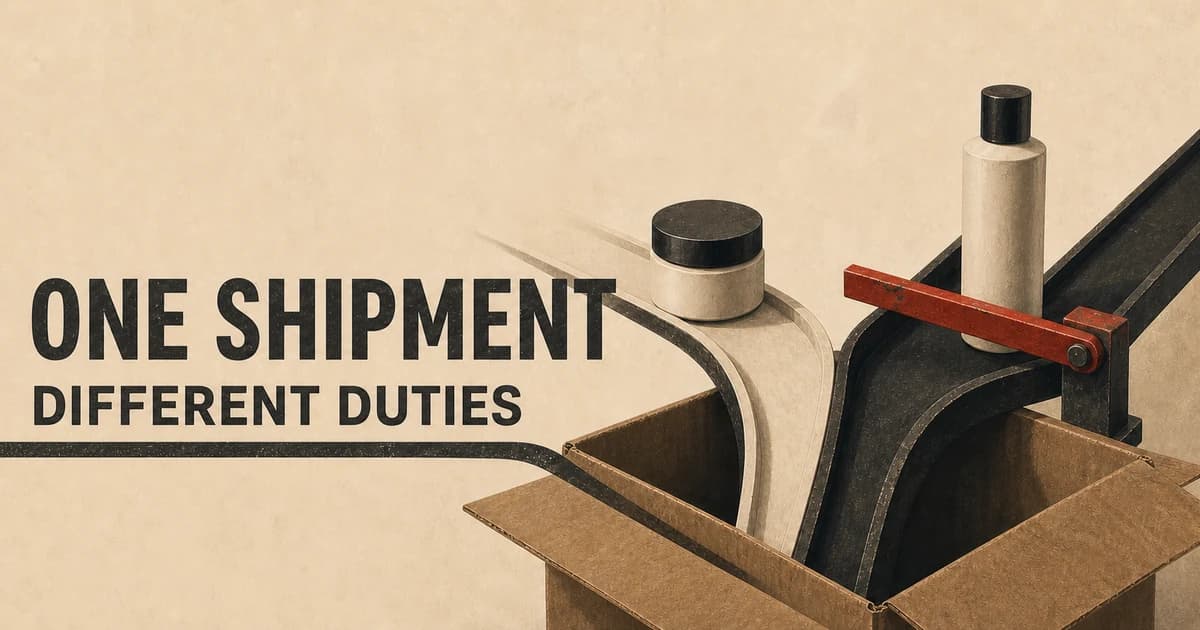
A Korean cream and a Korean shampoo can come from the same supplier, share the same origin, and travel in the same shipment. Their Russian import duties may still be different: 6.5% for the cream and 35% for the shampoo.
At a customs value of RUB 1 million, that is RUB 65,000 versus RUB 350,000. The difference is RUB 285,000 before logistics, import VAT, conformity assessment, labelling, and warehousing enter the calculation.
The Republic of Korea remains on Russia's unfriendly country list. At the same time, the current version of Russian Government Resolution No. 2240 excludes Korean origin from the 35% duty for several specific codes. The statement “Korean cosmetics enter at 6.5%” is therefore valid only after the assortment has been classified item by item.
Where Korea Gets 6.5% and Where It Gets 35%
The table covers the cosmetics codes that cause the most confusion.
| EAEU HS code | Product | Rate for Korean origin | Treatment under Resolution No. 2240 |
|---|---|---|---|
| 3303 00 100 0 | Perfumes | 6.5% | Korea is expressly listed as an exemption |
| 3303 00 900 0 | Toilet water | 6.5% | Korea is expressly listed as an exemption |
| 3304 10 000 0 | Lip makeup preparations | 6.5% | Korea is expressly listed as an exemption |
| 3304 20 000 0 | Eye makeup preparations | 35% | Korea is not listed as an exemption |
| 3304 91 000 0 | Powder, including compact powder | 6.5% | Korea is expressly listed as an exemption |
| 3304 99 000 0 | Other skincare preparations | 6.5% | Korea is expressly listed as an exemption |
| 3305 10 000 0 | Shampoos | 35% | Korea is not listed as an exemption |
| 3305 30 000 0 | Hair sprays | 35% | Korea is not listed as an exemption |
| 3305 90 000 9 | Other hair preparations | 6.5% | Korea is expressly listed as an exemption |
The increased-duty schedule remains in force through 31 December 2027 inclusive. Where Korean origin is excluded from the 35% rate, the current Common Customs Tariff of the EAEU applies at 6.5%.
This table does not replace product classification. The marketing name on a label or price list does not determine the code. A mask, for example, may be classified as a skincare product or a hair preparation. Those positions lead to different codes and potentially different duty scenarios.
Why Korea Can Be on the List and Still Receive Exemptions
The unfriendly country list and Resolution No. 2240 serve different purposes.
The first document identifies countries and territories. The second connects a duty rate to a product code and its origin. A single row can retain the 35% rate for most countries on the list while naming specific exceptions.
That is how the Korean exemptions work. Code 3304 99 000 0 commonly covers creams, serums, and other skincare preparations. The Republic of Korea is expressly excluded from the increased rate for that code. There is no Korean exemption for shampoos under 3305 10 000 0.
This gives part of the Korean assortment a genuine tariff advantage. It does not cover every cosmetics product.
The Duty Gap Is 28.5 Percentage Points
The comparison must use like-for-like goods and the same customs value. If Korean origin attracts 6.5% for a code while another origin remains at 35%, the duty gap is 28.5 percentage points.
At a customs value of RUB 1 million, the calculation is straightforward:
| Rate | Import duty |
|---|---|
| 6.5% | RUB 65,000 |
| 35% | RUB 350,000 |
| Difference | RUB 285,000 |
The final landed cost still depends on the purchase price, contract currency, logistics, insurance, customs value, import VAT, compliance documents, labelling, and warehouse handling. The duty gives Korea a strong starting position only for SKUs that actually fall within the exemptions.
A Korean cream may indeed reach Russia at a lower landed cost than a comparable European product. That conclusion requires two comparable products and a full landed-cost model. The duty rate alone is not a price guarantee.
The Exemption Can Fail Without Confirmed Origin
The EAEU HS code establishes what is being imported. Origin documents establish where the goods were produced. Both are required to apply the Korean exemption correctly.
Resolution No. 2240 sets a strict rule for covered goods: if origin is unknown or deemed unconfirmed, customs applies the increased rate from the resolution. A Korean brand, a Korean barcode, or dispatch from a Korean warehouse does not by itself replace proper proof of origin.
Before ordering a shipment, check:
- the full ten-digit EAEU HS code for every SKU;
- the manufacturer and country of production;
- the documents that will establish origin;
- the product description and composition across commercial and compliance documents;
- the rate in the current version of Resolution No. 2240 on the declaration date.
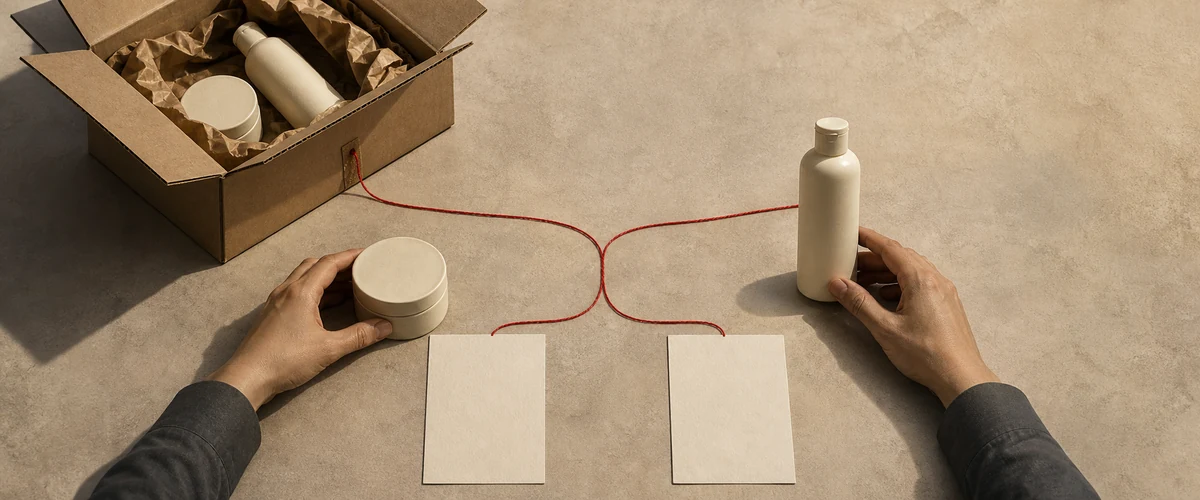 A cream jar and shampoo bottle from one shipment are checked separately for HS code and origin
For a mixed assortment, the calculation must be completed line by line. Applying one average rate to all Korean cosmetics will almost certainly produce an error.
What Else Belongs in the Supply Calculation
The tariff advantage leaves the other import costs and requirements in place. Cosmetics require advance planning for conformity assessment, Russian-language labelling, product records, and Chestny ZNAK labelling.
The route also changes the process. A direct shipment from Korea cleared through Russian customs follows a different scenario from road transport entering Russia through another EAEU member state. The latter may fall under SPOT, including DOPP, a QR code, and a security payment.
At K-Business, the calculation starts with the SKU list. We check the code, origin, and rate for each item before consolidating the shipment. This shows where Korea creates room in the landed cost and where the 35% duty absorbs it at customs.
Sources
- Russian Government Resolution No. 2240, version dated 10 June 2026
- Russian Government Resolution No. 529 dated 22 April 2025
- Resolution No. 1516 extending the schedule through 31 December 2027
- Common Customs Tariff of the EAEU, Chapter 33
- Russia's list of unfriendly countries and territories
The facts and rates in this article were checked on 15 July 2026. They should be verified against the current rules before a new customs declaration is filed.
Sergey Maltsev, CEO K-Business
Discuss a Korean supply and a calculation for your SKU list
Send us the assortment, purchase prices, and available documents. We will check the codes and duty rates and prepare a preliminary supply estimate.
FAQ
What import duty applies to Korean cosmetics in Russia in 2026?
There is no single rate for all Korean cosmetics. The base EAEU tariff of 6.5% applies to selected codes. A 35% duty applies to other products, including shampoos under 3305 10 000 0 and hair sprays under 3305 30 000 0.
Is South Korea on Russia's unfriendly country list?
Yes. The Republic of Korea is on the list. Russian Government Resolution No. 2240 nevertheless provides Korean-origin exemptions for selected cosmetics codes, so both the EAEU HS code and origin must be checked.
Which Korean cosmetics are exempt from the 35% duty?
Korea is expressly exempted for perfumes under 3303 00 100 0, toilet water under 3303 00 900 0, lip makeup under 3304 10 000 0, powder under 3304 91 000 0, other skincare under 3304 99 000 0, and other hair preparations under 3305 90 000 9. The current EAEU rate for these codes is 6.5% when Korean origin is properly established.
How long will the increased duties remain in force?
The current version of Resolution No. 2240 sets the end date at 31 December 2027 inclusive. The rules may change earlier, so the rate should be checked again before customs declaration.
What happens if the origin of the cosmetics is not confirmed?
For goods covered by Resolution No. 2240, the increased rate applies when origin is unknown or deemed unconfirmed. Origin documents should be checked before the customs declaration is filed.
Author
Сергей МальцевSee also
Cosmetics Labelling in Russia in 2026: What to Check Before Import
Which products require labelling, when to apply Data Matrix codes to imports from Korea, and how to take a shipment from product card to circulation.
DataMatrix hidden by packaging: why we built a duplicator
Extra packaging can hide the original marking code from the scanner. Here is how we solved the warehouse problem with a local Windows DataMatrix duplicator.
K-Business at InterCHARM 2025 — our first stand and exhibition results
First K-Business stand at InterCHARM 2025 at Crocus Expo, Moscow. Stand F7: brands TFIT, Daypiel, Ciracle, Sweeteen, AUL. Results of meetings with Korean partners.